 Labelly
How Reference Intake Percentages Are Calculated
Understanding RI values on UK food labels, the basis for calculation, and what the percentages represent.
What Are Reference Intake Values?
Reference Intake (RI) percentages on food labels indicate what proportion of an average adult's daily recommended intake of energy and key nutrients is provided by one serving of the product. These percentage values appear in a column on the nutrition information panel, typically showing figures like 15 percent, 25 percent, or 40 percent of daily RI for various nutrients.
The Basis for RI Percentages: Standardised Reference Values
RI percentages are calculated using standardised reference values established in UK and EU food labelling regulations. These reference values represent estimated daily recommended amounts for an average adult. The reference values are based on scientific evidence and represent what are considered appropriate intake levels for maintaining health in a population of adults.
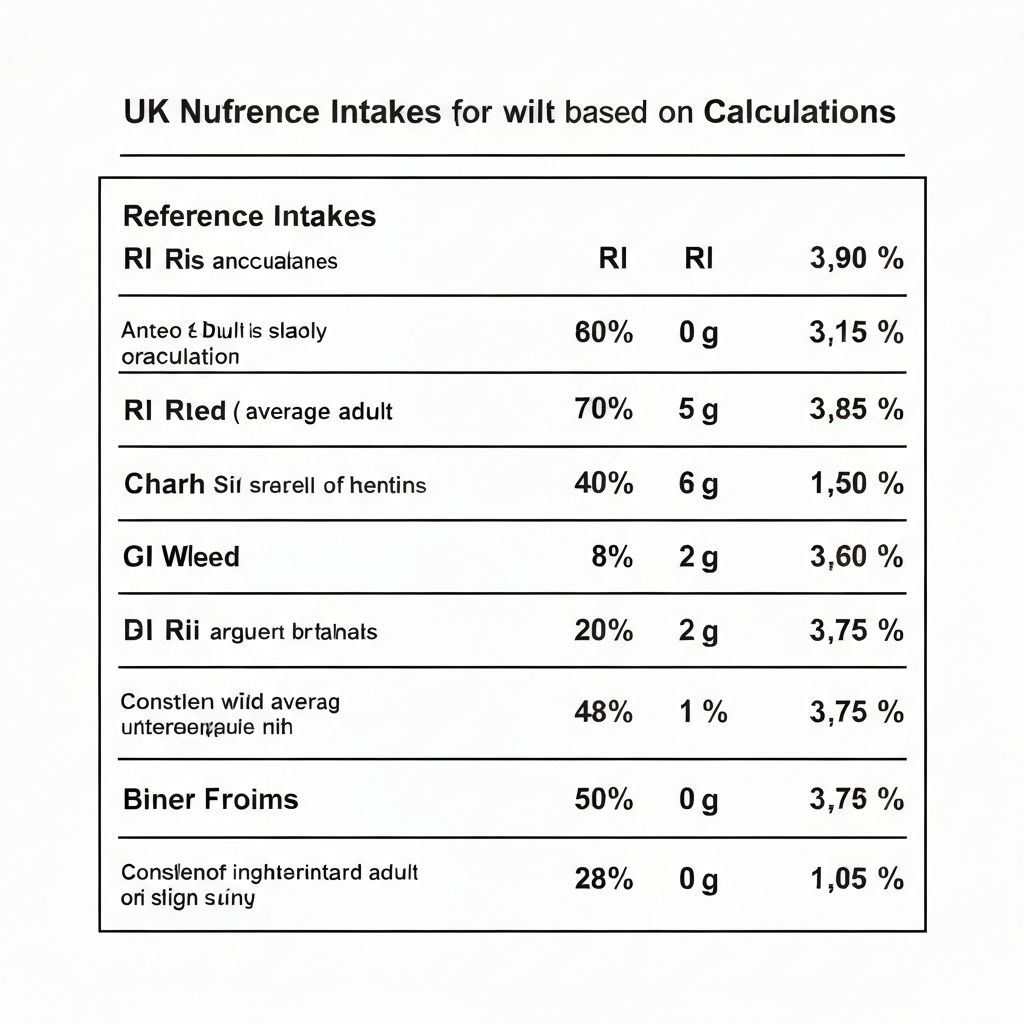
The standardised reference values include:
- Energy: 8,400 kJ (2,000 kcal)
- Fat: 70 grams
- Saturated fatty acids: 20 grams
- Carbohydrate: 260 grams
- Total sugars: 50 grams
- Fibre: 30 grams
- Protein: 50 grams
- Salt: 6 grams
How RI Percentages Are Calculated
The RI percentage for any nutrient is calculated using this formula:
RI Percentage = (Nutrient amount in one portion ÷ Reference value) × 100
For example, if a product contains 15 grams of fat per serving, and the reference value for fat is 70 grams:
(15 ÷ 70) × 100 = 21% of daily RI for fat
Why Average Adult Values Are Used
Reference values are based on an average adult because individual daily recommended amounts vary significantly based on age, sex, activity level, health status, and other factors. Children have different requirements than adults. Pregnant and breastfeeding women have different requirements. Individuals with certain health conditions have different requirements. The average adult reference values represent a middle point that is generally applicable across the adult population, though not universally appropriate for every individual.
Interpreting RI Percentages
An RI percentage of 25 percent means the nutrient amount in one serving represents one quarter of the estimated daily recommended amount for an average adult. An RI percentage of 50 percent means one serving represents half of the daily recommended amount. Higher percentages indicate the product is a richer source of that nutrient per serving.
It is important to remember that these percentages apply to the product as a single portion and do not account for other foods consumed during the day. Additionally, the reference values are estimates and may not be appropriate for all individuals.
RI Values and Daily Intake Context
Understanding RI percentages requires context about total daily consumption. If a product provides 20 percent of the daily RI for a nutrient, the remaining 80 percent should come from other foods consumed during the day. The reference value of 2,000 kcal for energy is commonly used as a baseline for percentage calculations, though individual energy needs vary based on activity level, metabolism, age, and other factors.
Energy and Nutrient-Specific Reference Values
Different nutrients have different reference values because they are required in different amounts. Energy is measured in large quantities (thousands of kilojoules), while some micronutrients are required in very small quantities. The reference values balance representing the standard recommended amounts with practical labelling requirements.
Voluntary vs Mandatory RI Percentage Display
Displaying RI percentages on the nutrition panel is optional under UK and EU labelling regulations, not mandatory. Manufacturers may choose whether to include this column. However, many products do include RI percentages as they are considered helpful for consumers comparing products. The presence or absence of the RI column varies by product and brand.
Limitations of RI Percentages
RI percentages are based on average adult requirements and do not account for individual variation. They represent a starting point for understanding how much a nutrient a product contains relative to standard recommendations, but they cannot be used to determine whether a product is appropriate for a specific individual. Personal dietary needs require individual assessment.
Explore other labelling concepts
Discover additional detailed guides about UK food labelling systems and nutrition information presentation.
View all labelling explorations →