 Labelly
Understanding the Traffic Light Front-of-Pack System
How UK colour-coded food labels work, what the colours indicate, and how to use traffic light labelling for product comparison.
Overview of Traffic Light Labelling
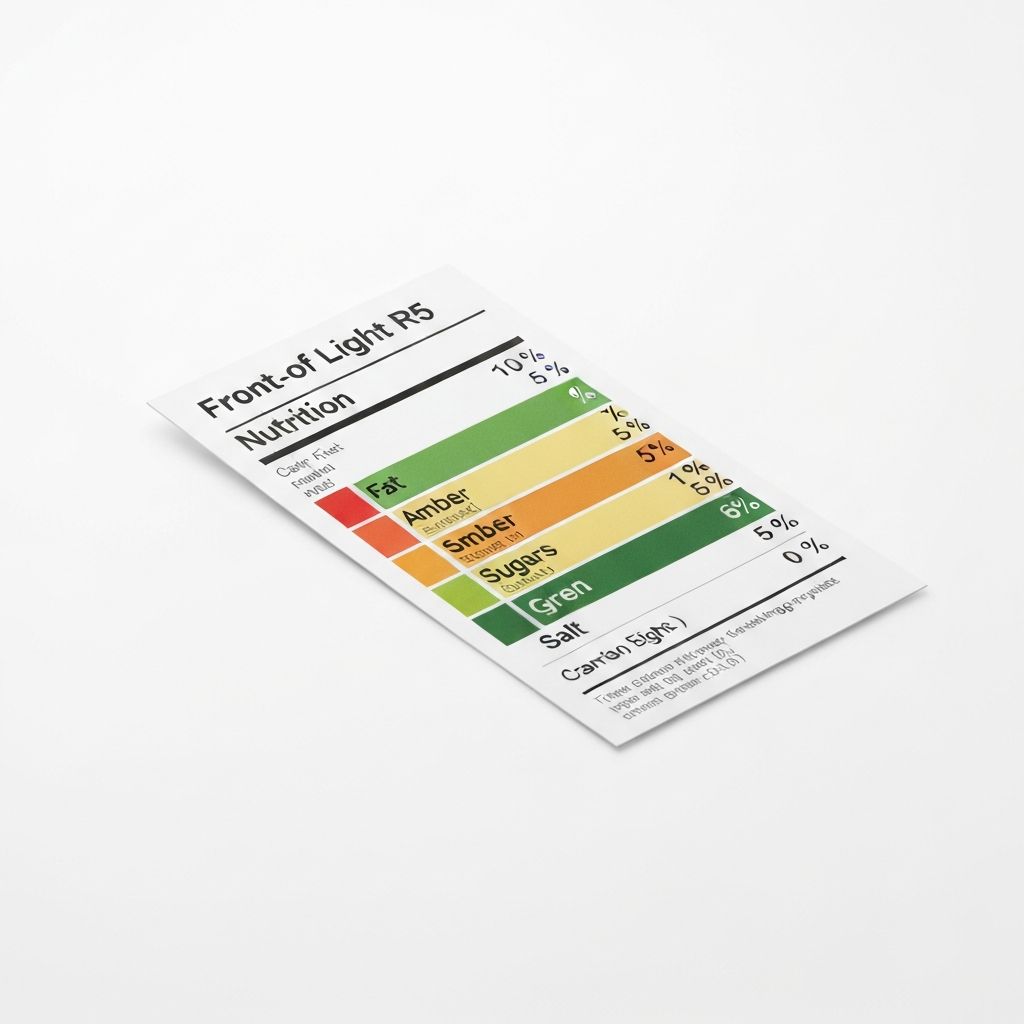
The traffic light system is a front-of-pack labelling format used on UK food packaging that uses colour coding to indicate the level of key nutrients per 100 grams. This visual system provides a quick visual assessment of nutrient levels at the point of purchase. Traffic light labels display colour-coded boxes in red, amber, or green for nutrients: fat, saturated fatty acids, sugars, and salt.
The Three Colours and What They Mean
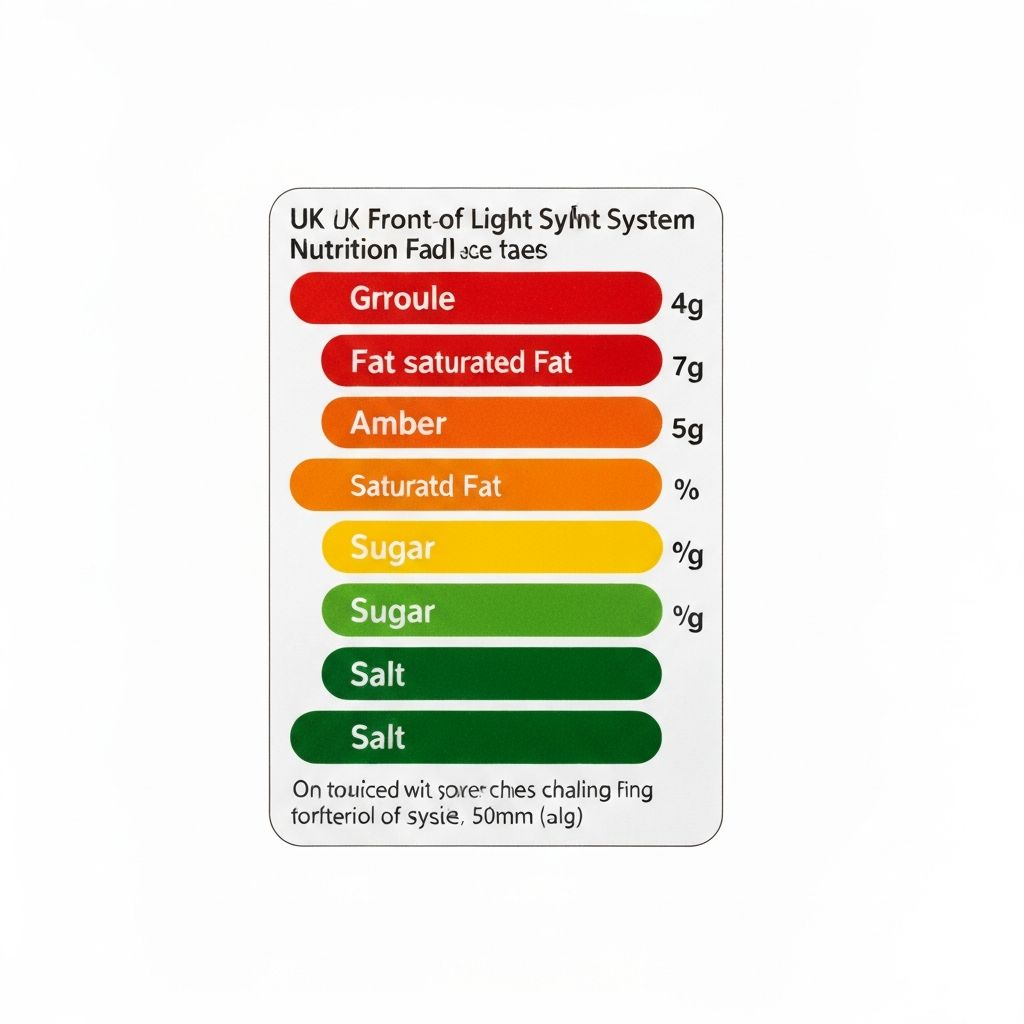
Red = High Nutrient Level
Red indicates the nutrient level is high per 100 grams. The product contains a high amount of the nutrient relative to standardised thresholds. Red does not mean the product is unsafe or unsuitable; it indicates the nutrient level is elevated.
Amber = Medium Nutrient Level
Amber indicates the nutrient level is medium per 100 grams. The nutrient amount is between the high and low thresholds. Amber represents the middle range of nutrient levels.
Green = Low Nutrient Level
Green indicates the nutrient level is low per 100 grams. The product contains relatively little of the nutrient. Green reflects lower nutrient levels relative to the standardised thresholds.
Which Nutrients Are Colour-Coded?
Traffic light labels colour-code four nutrients:
- Fat: Total fat per 100g
- Saturated Fatty Acids: Saturated fat per 100g
- Sugars: Total sugars per 100g
- Salt: Sodium converted to salt per 100g
Not all nutrients receive colour coding. Energy, fibre, protein, and carbohydrates are not colour-coded on traffic light labels, though they may appear on the detailed nutrition panel.
Threshold Values for Red, Amber, and Green
Colour assignments are based on standardised thresholds set in UK labelling regulations. The thresholds vary by nutrient:
| Nutrient | Red (High) | Amber (Medium) | Green (Low) |
|---|---|---|---|
| Fat | More than 17.5 g per 100g | 5-17.5 g per 100g | 3 g or less per 100g |
| Saturated Fat | More than 5 g per 100g | 1.5-5 g per 100g | 1.5 g or less per 100g |
| Sugars | More than 12.5 g per 100g | 5-12.5 g per 100g | 5 g or less per 100g |
| Salt | More than 1.5 g per 100g | 0.3-1.5 g per 100g | 0.3 g or less per 100g |
For liquids and certain products, slightly different thresholds may apply. The thresholds are standardised across all manufacturers and apply to all foods in the same category.
Traffic Light System and Product Comparison
The visual nature of traffic light labelling allows quick visual comparison between products at the point of purchase. Comparing the colour patterns across similar products can indicate which products have higher or lower levels of specific nutrients per 100 grams. Products with more green colours tend to have lower levels of these nutrients, while products with more red colours tend to have higher levels.
Important Clarification: Colour Does Not Equal Value Judgement
The traffic light colours indicate only whether nutrient levels are high, medium, or low relative to standardised thresholds. The colours do not imply whether a product is good or bad, healthy or unhealthy. Some foods naturally contain higher levels of certain nutrients. For example, oils contain high fat levels by nature, and would display red for fat. Nuts contain high fat but also valuable nutrients. The colour indicates nutrient level, not product quality or suitability.
Traffic Light Labelling vs Detailed Nutrition Panel
Traffic light labels provide quick visual information on four nutrients and are displayed on the front of packaging for point-of-purchase comparison. The detailed nutrition panel on the back of packaging provides precise numerical values for all mandatory nutrients. Both formats serve different purposes: traffic lights for quick visual comparison, nutrition panels for detailed information.
Voluntary Nature of Traffic Light Labelling
Traffic light labelling is voluntary in the UK, not mandatory. Manufacturers choose whether to include traffic light labels on their products. This means some products display traffic lights while others show only the detailed nutrition panel. When present, traffic lights provide consistent information using standardised colour criteria and thresholds across all manufacturers.
Explore other labelling concepts
Discover additional detailed guides about UK food labelling systems and nutrition information presentation.
View all labelling explorations →